
You’ve spent 20 years building a successful career in credit risk management, reducing bad debt, improving DSO, and managing millions of dollars in accounts receivable.
Then one day you discover an excellent job opportunity, carefully prepare your resume, complete the company’s online application, and click “Submit.”
Within seconds, an automated message arrives: “Thank you for your application. We will contact you if your qualifications match our requirements.” And then? Nothing.
You apply for another position. Then another. After submitting 30 applications, you’ve received 30 automated acknowledgments, but not a single invitation to interview. Sound familiar?
The Digital Hiring Challenge
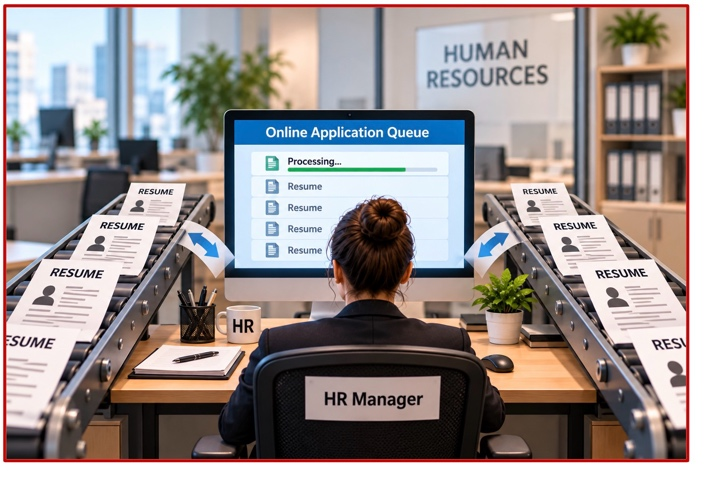
Today, many companies use applicant tracking systems (ATS) to collect, organize, and screen job applications. Some also employ automated tools to rank candidates or identify qualifications matching the job description.
These systems help employers manage large numbers of applications. However, they raise an uncomfortable question: Could an exceptionally qualified candidate be overlooked before speaking with an actual person?
Not every company automatically rejects resumes through software, and human recruiters remain involved in many hiring decisions. Nevertheless, relying exclusively on online applications may leave talented professionals wondering whether their experience has received meaningful consideration.
So, what can applicants do differently?
Put LinkedIn to Work
Rather than simply submitting an application and hoping for a response, consider taking a more proactive approach.
Start by locating the prospective employer’s LinkedIn company page. Many companies have a “People” section where you can identify employees, including human resources managers, finance directors, CFOs, COOs, and other executives.
Next, consider sending a few appropriate individuals a short connection invitation.
For example:
“Hello Thomas, I’d like to invite you to join my LinkedIn network. Best regards, Joe Smith.”
That’s it. No lengthy introduction. No immediate request for an interview. Just a courteous invitation to connect.
As your network grows, you may discover additional employees through mutual connections. Someone already in your network might even know the hiring manager and be willing to make an introduction.
Turn Connections into Relationships
Getting connected is only the beginning. The next step is becoming someone your new contacts recognize.
When LinkedIn notifies you of a contact’s birthday, work anniversary, promotion, or other professional milestone, take a moment to send a brief, personalized message. Include the person’s name and offer sincere congratulations or good wishes.
For example: “Congratulations on your work anniversary, Thomas! Wishing you continued success!”
These small gestures may seem insignificant, but repeated over time, they can help establish familiarity and goodwill. You may also be pleasantly surprised at the response you receive by wishing your LinkedIn connection a very happy birthday.
Admittedly, monitoring these occasions takes time and effort, especially when you’re following numerous contacts. However, paying particular attention to individuals at companies where you would like to work can be a worthwhile investment.
The objective isn’t to ask for a favor immediately. It’s to develop professional relationships so that when an appropriate opportunity arises, your name may already be familiar.
What About Delivering Your Resume Personally?
If the prospective employer is nearby, consider delivering a resume addressed to the hiring manager or human resources director.
This may be practical with smaller companies, while larger organizations often require applications through their online systems. A preliminary inquiry can help determine whether a personal delivery would be welcome.
Always complete the employer’s required application process.
The Human Advantage
For credit and collection professionals, finding the right contact, establishing rapport, and communicating effectively are fundamental skills. Demonstrating these abilities during a job search may itself leave a favorable impression.
Personal connections should never replace qualifications or fair hiring practices. Their purpose is to help qualified candidates receive appropriate consideration.
Technology has made applying for jobs easier. But getting noticed may be harder than ever. And perhaps the best way to stand out in an increasingly digital hiring process is to remind employers that behind every resume is a real person.
Your thoughts and comments (nseiverd@cmiweb.com) are most welcome!
Nancy Seiverd, President
CMI Credit Mediators, Inc.
All Rights Reserved
