
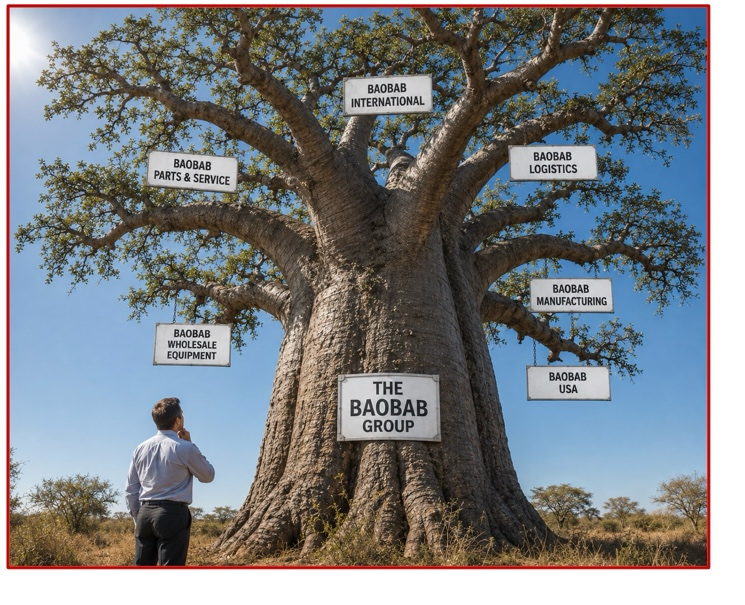
Here’s the background: a credit manager believes the company she is selling to is a wholly owned U.S. subsidiary of a financially strong German corporation. Although the U.S. company’s credit isn’t particularly strong, its presumed German parent has an excellent credit rating, providing some reassurance that a financially strong company stands behind the U.S. operation.
Except however, it doesn’t.
It turns out that the German company owns only 20% of the U.S. business. In addition, the financially strong company that everyone thought was the parent isn’t really the parent at all.
Situations like this illustrate an important lesson for anyone responsible for granting commercial credit: A financially strong company somewhere in the corporate family does not necessarily make your customer financially strong, and it certainly doesn’t mean that company is responsible for your customer’s debts.
Before extending significant credit, here are five questions worth asking.
1. What Is the Exact Legal Name of the Corporate Entity Buying from Us?
This sounds very elementary, but corporate names can be surprisingly confusing. A company may conduct business under a trade name that is very similar to its parent, affiliate, or other companies within the corporate group.
The important question is not simply, “Who are we doing business with?” It is: “What is the exact legal entity obligated to pay our invoices?”
Make sure the legal name on the credit application, contract, purchase orders, invoices, and other documentation is consistent.
2. Who Actually Owns the Company and By How Much?
Don’t assume that because a company describes itself as “part of” an international corporate group, it is wholly owned by that group.
From a credit-risk standpoint, there can be an enormous difference between 100% ownership and a 20% investment. Terms such as subsidiary, affiliate, sister company, and joint venture can describe very different ownership relationships.
3. Is the Stronger Company Actually Responsible for the Debt?
This may be the most important question of all.
Even when a financially strong parent owns 100% of a subsidiary, that does not necessarily mean the parent is automatically responsible for the subsidiary’s unpaid invoices. Separately incorporated companies generally have their own assets, liabilities, and legal obligations.
If your credit decision depends heavily upon the financial strength of another company within the corporate family, consider obtaining an appropriate parent-company guarantee or other form of credit support before extending the credit.
4. Whose Financial Statements and Credit Rating Are We Reviewing?
An impressive set of consolidated financial statements can provide valuable information about the overall corporate group. But the entity with billions of dollars in revenue may not be the company that owes you $250,000.
The same caution applies to credit reports and ratings. When reviewing financial information, make sure you understand exactly which legal entity is being evaluated and how that entity relates to your customer.
5. Has the Corporate Family Tree Changed?
Corporate structures are not carved in stone. Companies acquire and sell subsidiaries, bring in new investors, create joint ventures, spin off divisions, reorganize operations, and change ownership percentages.
The company that was a wholly owned subsidiary when you opened the account three years ago may have a very different ownership structure today. For significant credit exposures, corporate relationships should therefore be reviewed periodically rather than only when the original credit application is approved.
A famous corporate name, a financially strong shareholder, or membership in a multinational group may provide some comfort. But none of those things answers the most important credit question: Who legally owes us the money, and who has actually agreed to stand behind that obligation?
When significant credit is involved, don’t rely on the corporate family tree. Make sure you know exactly which branch you’re extending credit to.
Your thoughts and comments (nseiverd@cmiweb.com) are most welcome!
Nancy Seiverd, President
CMI Credit Mediators, Inc.
All Rights Reserved
Image by freepik.com
