
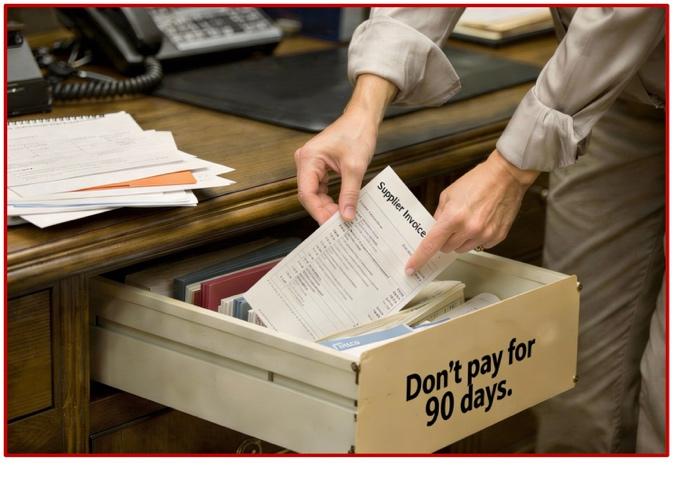
Every January, credit professionals brace themselves for a familiar trend: the sudden wave of customers who decide, consciously or not, that the new year is the perfect time to stretch payment terms. While individuals throughout the world promise to eat healthier, exercise more, or stay organized, many companies adopt a very different kind of resolution: delay payments as long as possible. And despite the optimism that comes with a new calendar year, this resolution tends to stick far longer than any gym membership.
A major reason customers pay late in January is the internal restructuring that happens inside organizations during the first quarter. New budgets are rolled out, spending controls reset, management shifts occur, and departments fight for financial resources. During this transition period, accounts payable teams often operate in a cloud of uncertainty. They’re told to “hold all non-critical payments,” review outstanding obligations more carefully, or freeze expenditures until leadership finalizes directives. For credit departments, this translates into unexpected delays, unclear timelines, and customers who simply don’t know when they’ll have approval to release funds.
Another driver behind January slow-pay behavior is the shift in customer priorities. Many companies focus heavily on tax obligations, year-end audit preparations, and financial reporting during the first quarter. As a result, their cash allocation tilts toward compliance and internal deadlines rather than vendor payments. Suppliers, especially those without strict enforcement or contractual leverage, often get pushed to the end of the line. It isn’t intentional disrespect; it’s triage. But for credit managers, the consequences feel the same: extended A/R cycles and increased collection activity.
On top of that, January tends to expose weaknesses in a customer’s own receivables. Customers who rely on a tight cash conversion cycle suddenly find themselves short if their clients have delayed remittances. This creates a domino effect in which one customer’s tardiness multiplies across industries. What begins as a small delay in one tier of the supply chain quickly evolves into widespread slow-pay behavior. When credit teams dig deeper, they often discover that their customer’s customers are the real cause of the cash flow disruption.
To stay ahead of the curve, credit departments need to monitor early-year behaviors and adapt their strategies quickly. Some indicators that a customer may be entering its annual delay cycle include:
- Requests for revised payment schedules starting in Q1
- Increased inquiries about discounts, concessions, or extended terms
- Higher volume of short-payments or unauthorized deductions
- Sudden changes in A/P personnel or approval steps
- Customers pushing new orders while past due balances grow
None of these alone signal trouble, but together they form a clear pattern: the customer is maneuvering for more breathing room.
Fortunately, credit teams are not powerless. Clarifying terms on new orders, encouraging progress payments, and tightening internal follow-up procedures can also prevent customers from drifting too far off track. Most importantly, credit professionals who stay proactive rather than reactive can set the tone for the entire year, shifting customers away from habitual late-pay behavior and back toward consistent, predictable performance.
Your thoughts and comments (nseiverd@cmiweb.com) are most welcome!
Nancy Seiverd, President
CMI Credit Mediators, Inc.
All Rights Reserved
Image by freepik.com
